
The Odyssey of the S.S. Exodus
In the aftermath of World War II, an overwhelming number of Jewish Holocaust survivors found themselves stranded in displaced persons (DP) camps across Germany, Austria, and Italy. With British authorities restricting immigration to Mandatory Palestine, the Aliyah Bet movement launched clandestine missions to bring Holocaust survivors to the region, culminating in the 1947 voyage of the SS Exodus.
On July 11, 1947, the SS Exodus set sail from the Port of Sète, France, to Haifa with over 4,500 Jewish men, women, and children, hoping to immigrate to Mandatory Palestine. The ship was intercepted by British naval forces on July 18th, just before reaching the shores of Haifa. A violent confrontation erupted between British naval forces and the ship’s passengers. The clash claimed the lives of a Jewish crew member and two passengers, while dozens more sustained injuries.
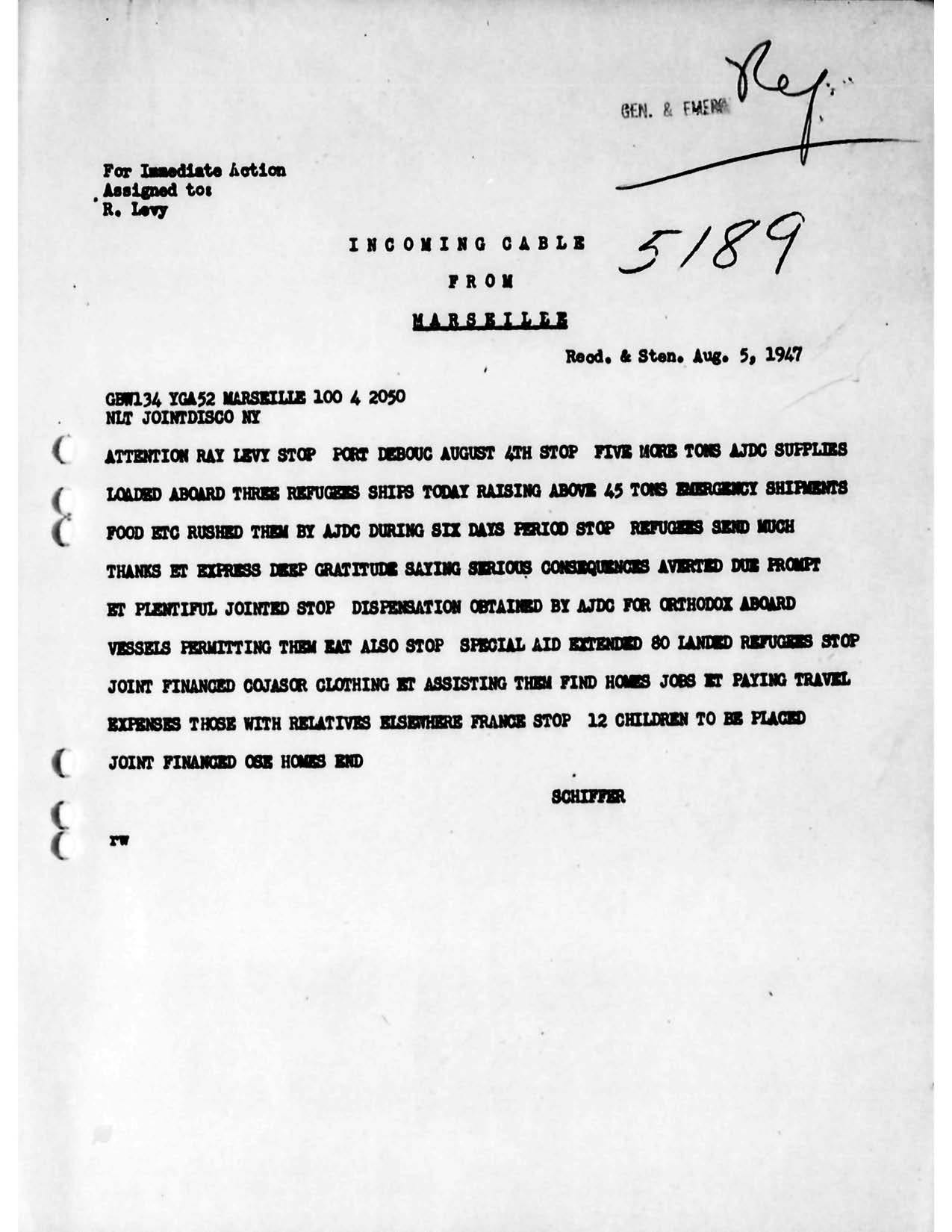
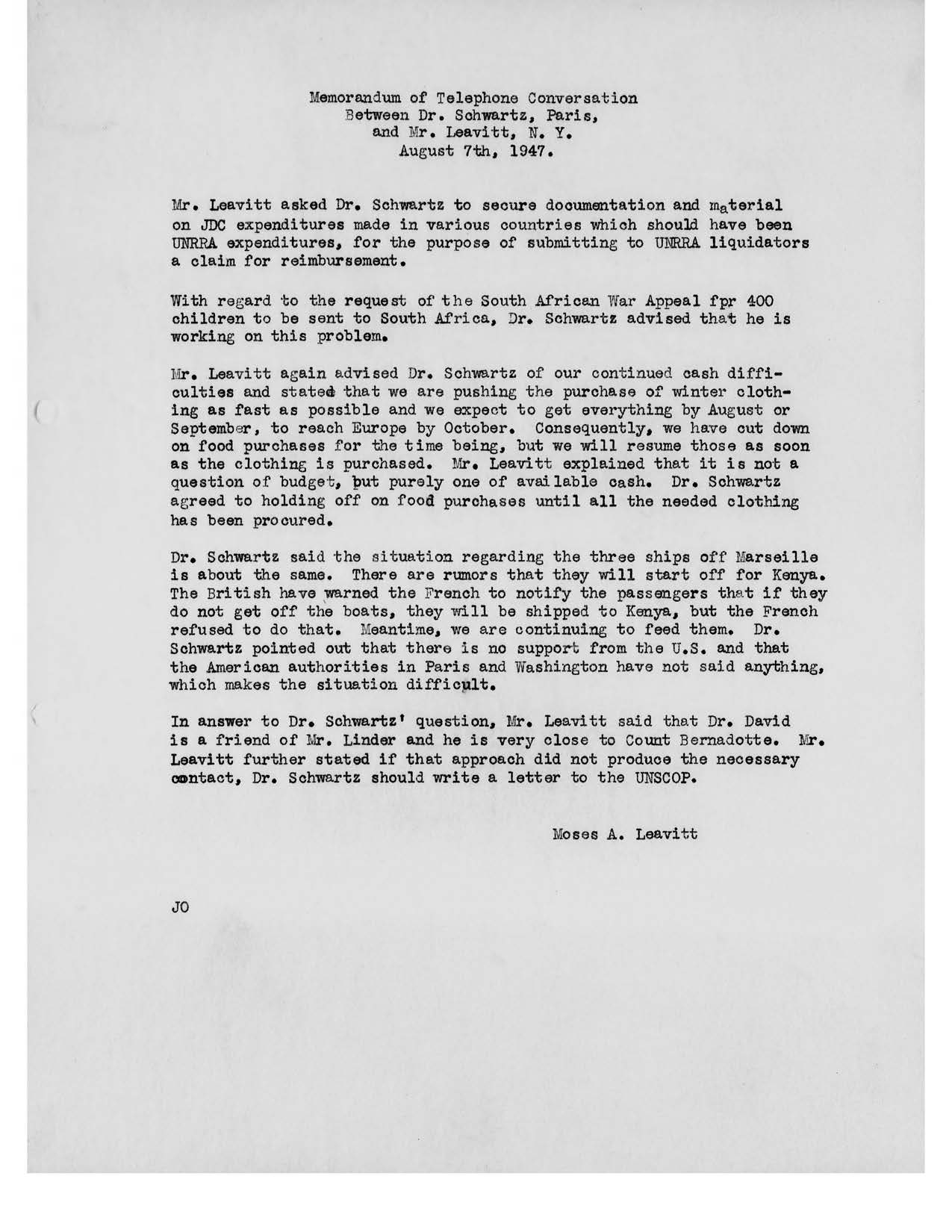
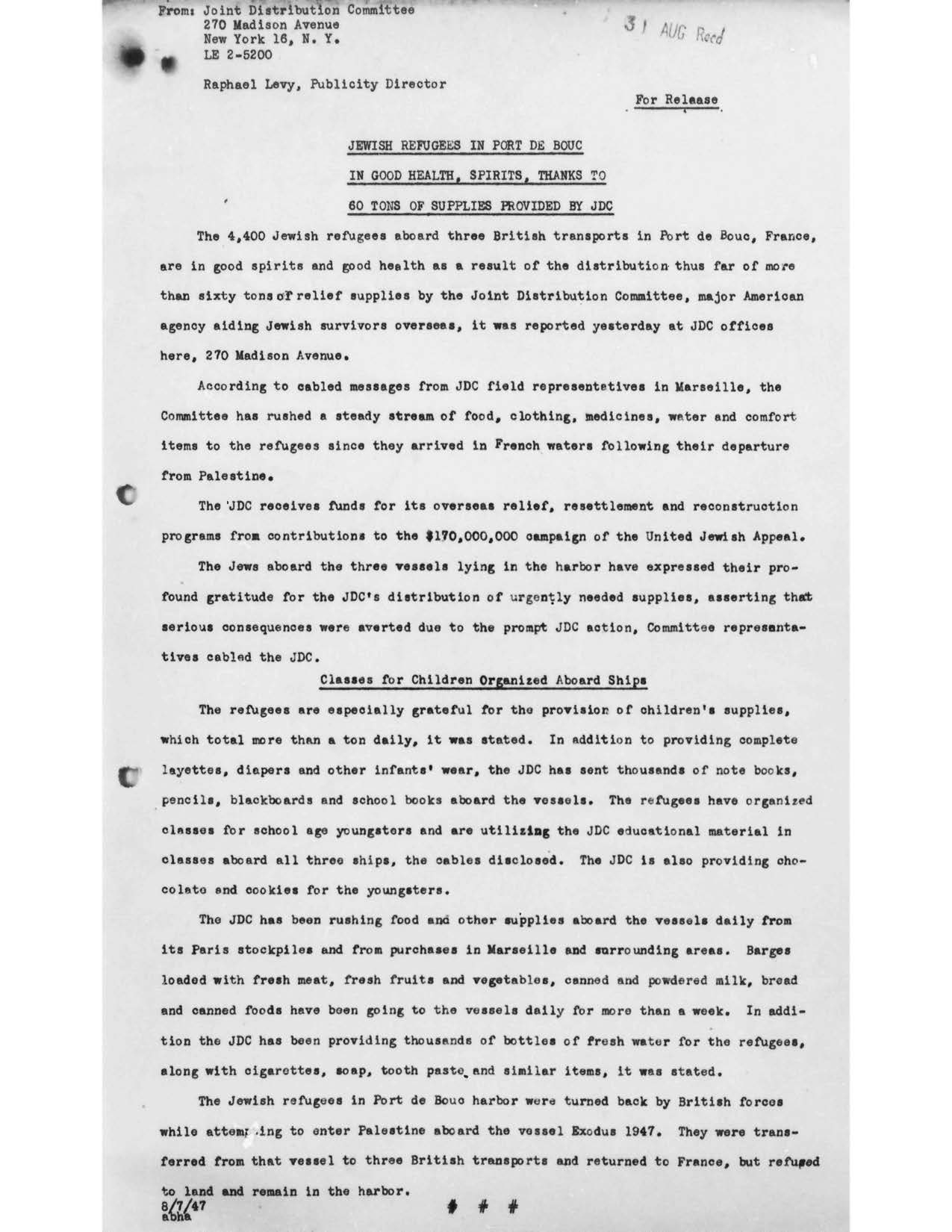
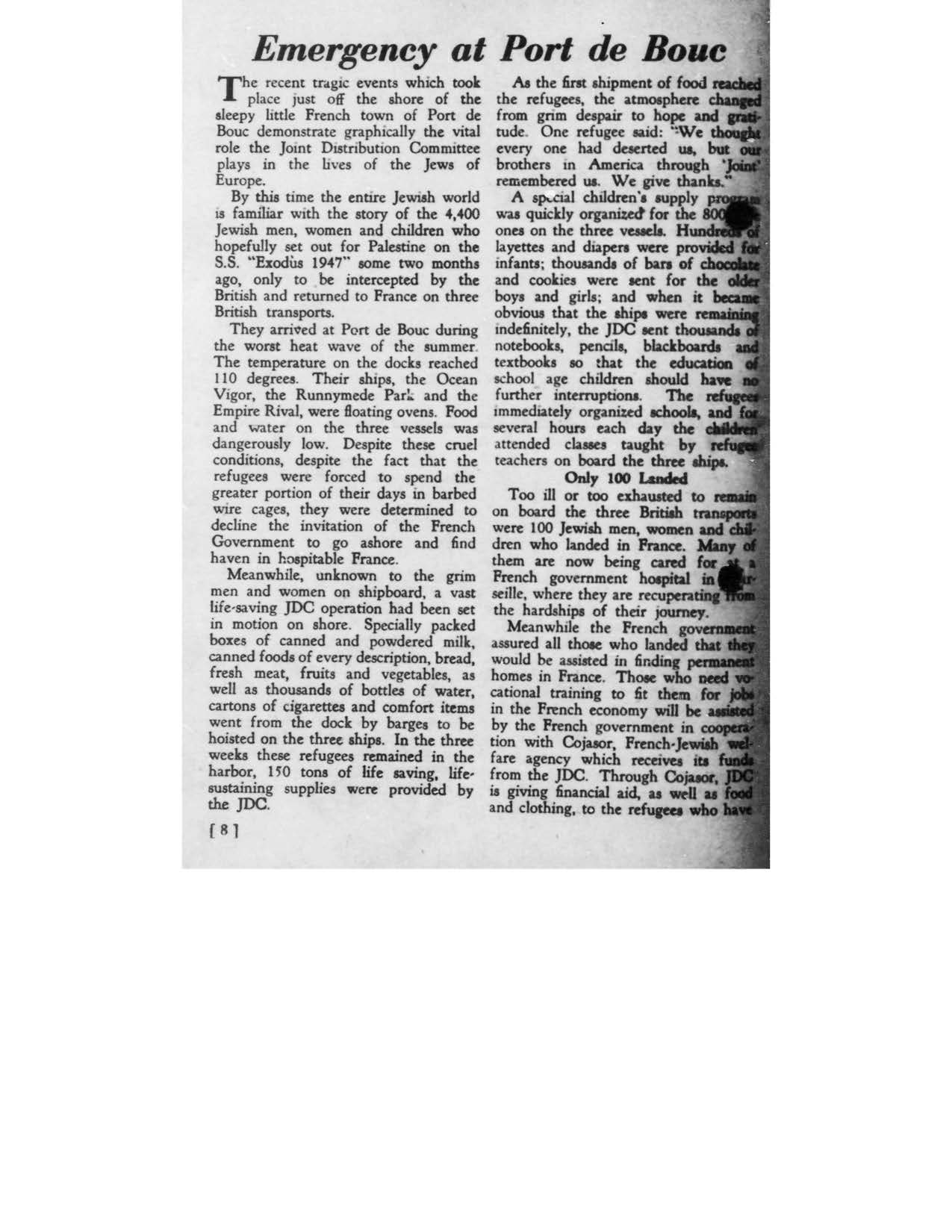
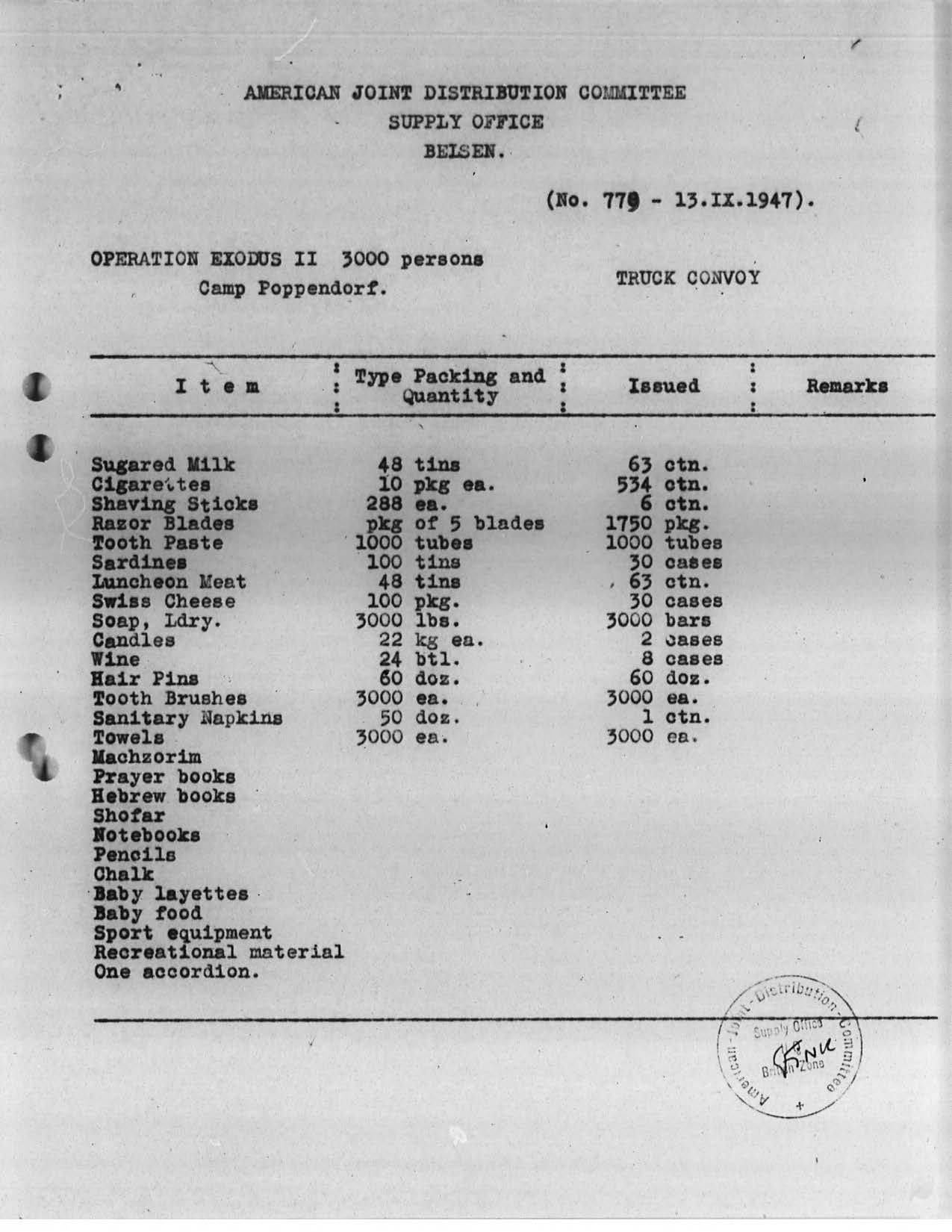
The British announced that the passengers on board the SS Exodus would not be allowed to disembark and would instead return to France on three navy transports: Ocean Vigor, Empire Rival, and Runnymede Park. Upon hearing the news, the American Jewish Joint Distribution Committee (JDC) began organizing support for passengers ahead of their arrival in Port-de-Bouc in France. Laura Margolis, JDC country director for France, supervised the relief operations in cooperation with the French government. JDC sent shipments of food, medicine, and relief supplies for children including diapers, notebooks and pencils, toys, and most notably chocolate chip cookies and candy to lift the spirits of the boys and girls aboard the ships.
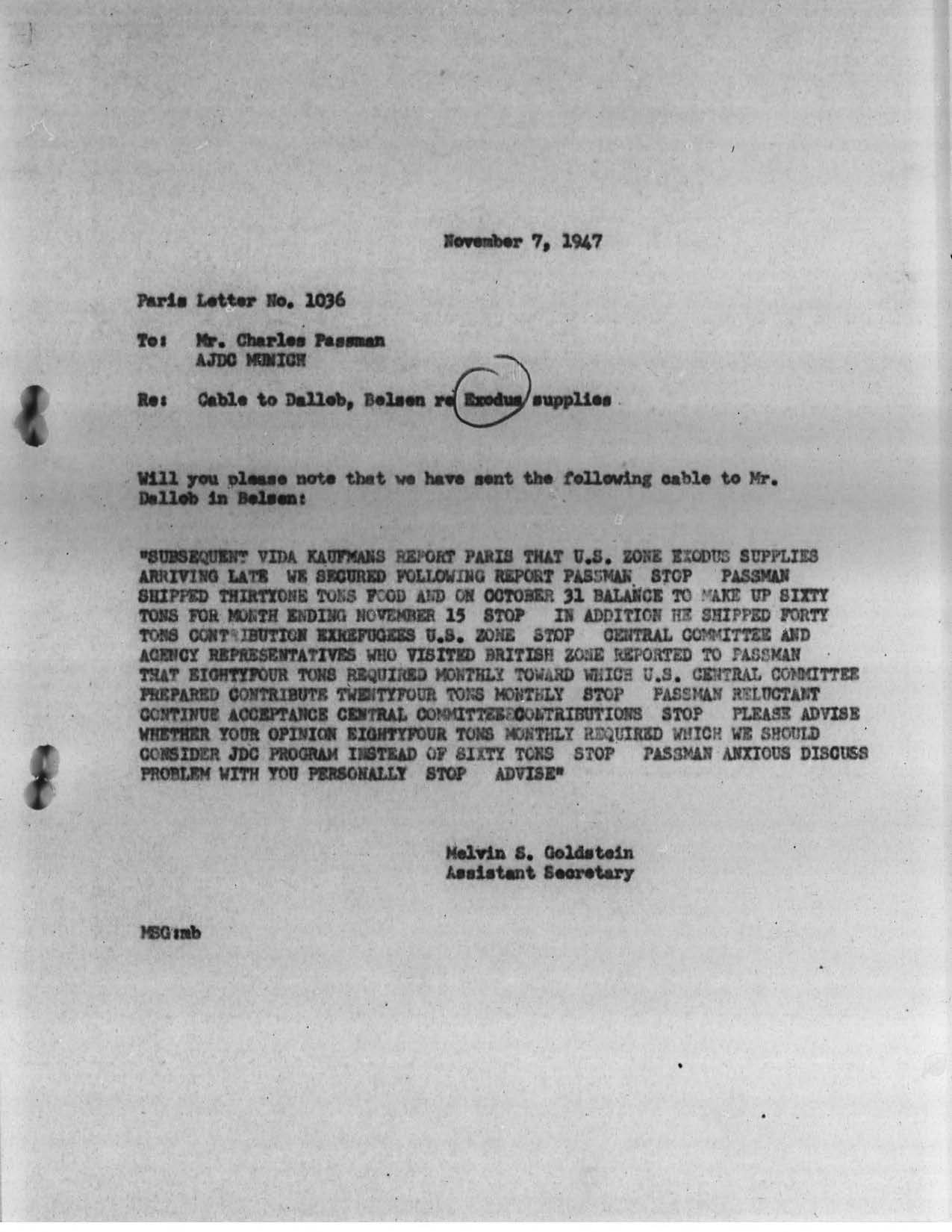
For three weeks, the passengers remained on the ships anchored in Port-de-Bouc. Despite brutal conditions aboard, the passengers steadfastly resisted every effort to force them off the ship, demanding entry into Mandatory Palestine. The Exodus crisis drew global outrage, and the passengers’ hunger strike captured global attention. In response, Britain sent the three ships back to Germany. Before their departure, the JDC placed over 150 tons of food, children’s clothing, bed sheets, and medical aid on the boats.
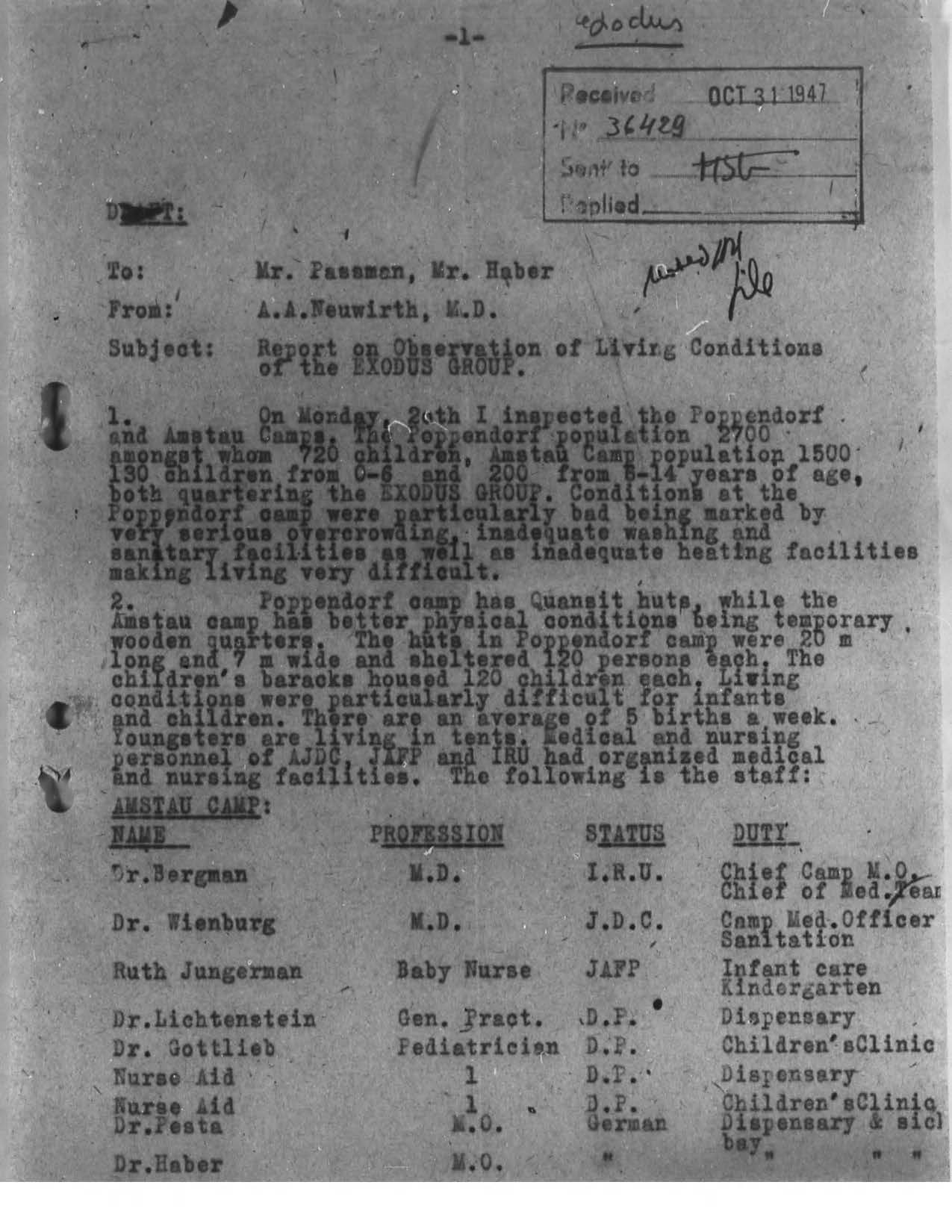
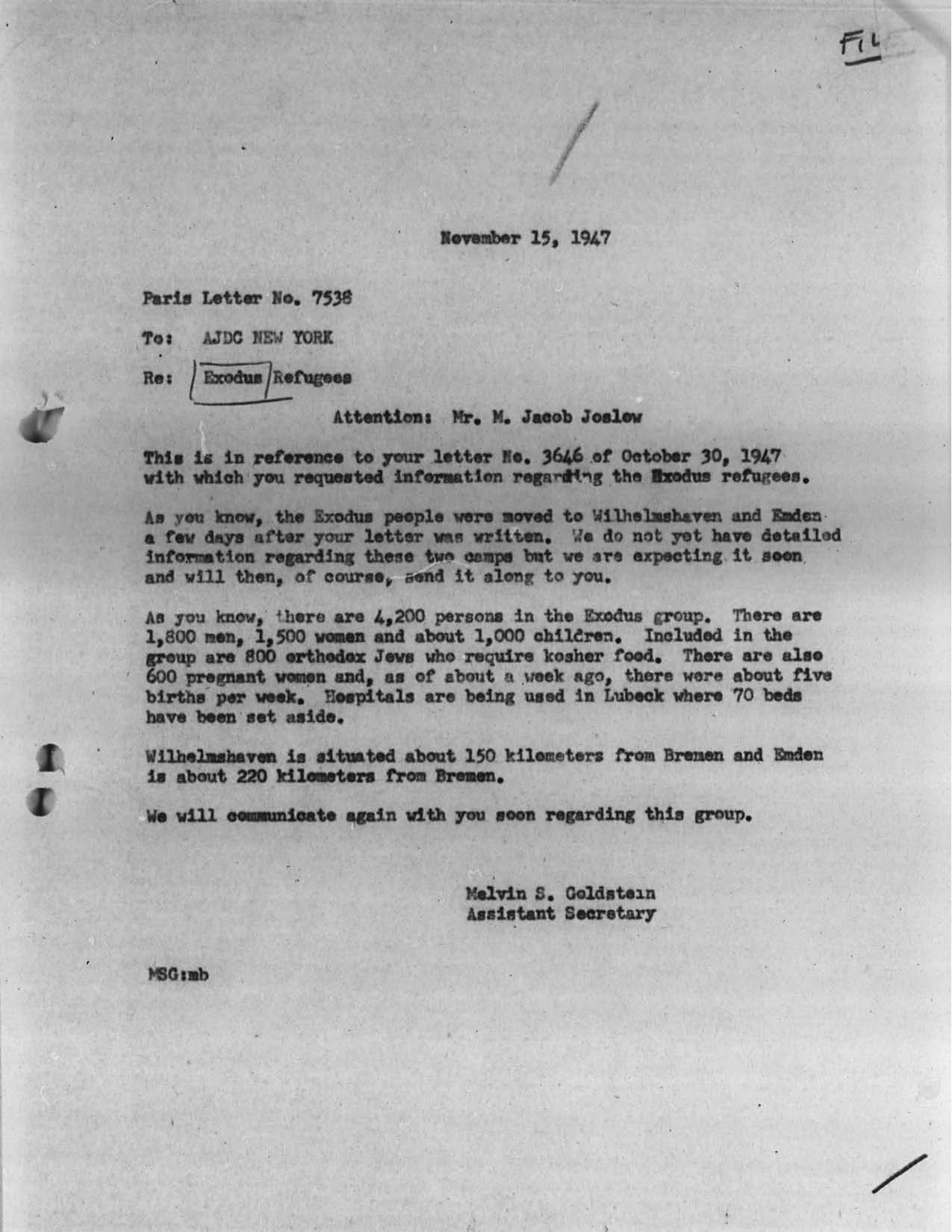
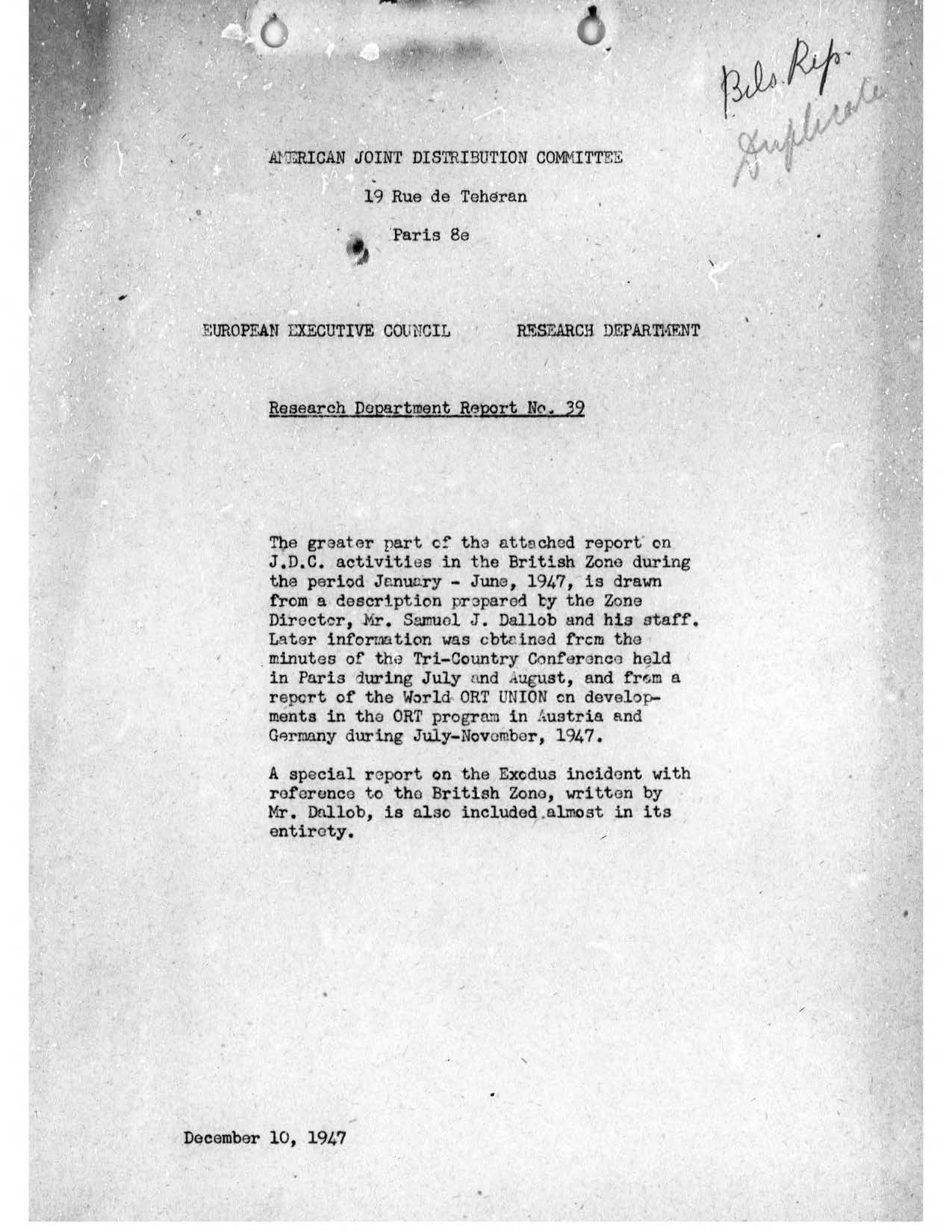
By early September, the Ocean Vigor, Empire Rival, and Runnymede Park reached the shores of Hamburg, Germany. The passengers were placed in two camps in the Lübeck region in the British occupied zone of Germany: Poppendorf, originally a POW camp, and Am Stau, which consisted of former transit barracks for British soldiers. Both camps were strictly controlled by British guards and German police forces and surrounded by rows of barbed wire. The camps were unable to accommodate the influx of refugees. In Poppendorf the living arrangements consisted of overcrowded Nissen huts and tents, with multiple people sharing small mattresses and unsanitary latrines located on the far end of the camps. Am Stau was somewhat better, but neither camp had central heating, making the extreme weather conditions unbearable.
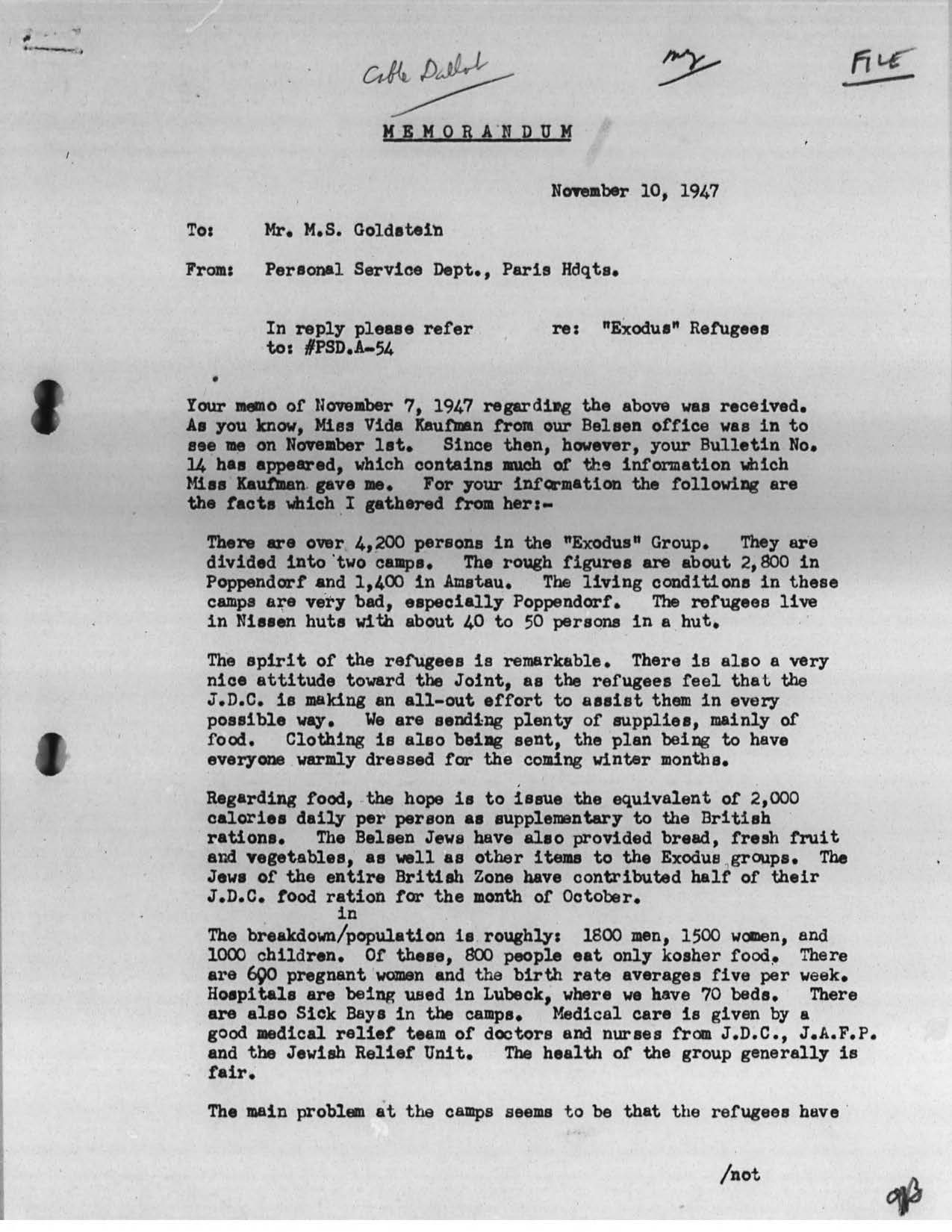
By mid-September, camp committees were established enabling JDC to collaborate closely with camp leaders of each camp to deliver aid. Vida Kaufman, JDC chief welfare worker at Bergen-Belsen, acted as a liaison between the JDC and the Exodus group and visited the camps regularly to handle the supplies.
Although the Control Commission for Germany assigned a small team of German medical personnel at each camp, medical aid remained inadequate. Amid escalating health concerns, a medical relief team of doctors and nurses from the JDC, Jewish Agency for Palestine (JAFP), and the Jewish Relief Unit, was permitted into the camps in late September. In response to drastic British ration cuts, JDC also stepped in to deliver critical nutritional aid to combat widespread malnourishment.
Schools were set up in the camp providing early childhood education, as well as Talmud Torah classes. JDC sent supplies for Rosh Hashanah including prayer books, Yiddish and Hebrew newspapers, candles, festive foods, and religious garments.
Under international pressure, the British relocated Exodus refugees to the under-equipped Emden and Sengwarden camps in November, where the JDC stepped in to provide crucial humanitarian aid. Many refugees, determined to reach Mandatory Palestine, attempted illegal entry but were detained in Cyprus&where they remained until most succeeded in reaching their destination after Israel’s establishment in May 1948.
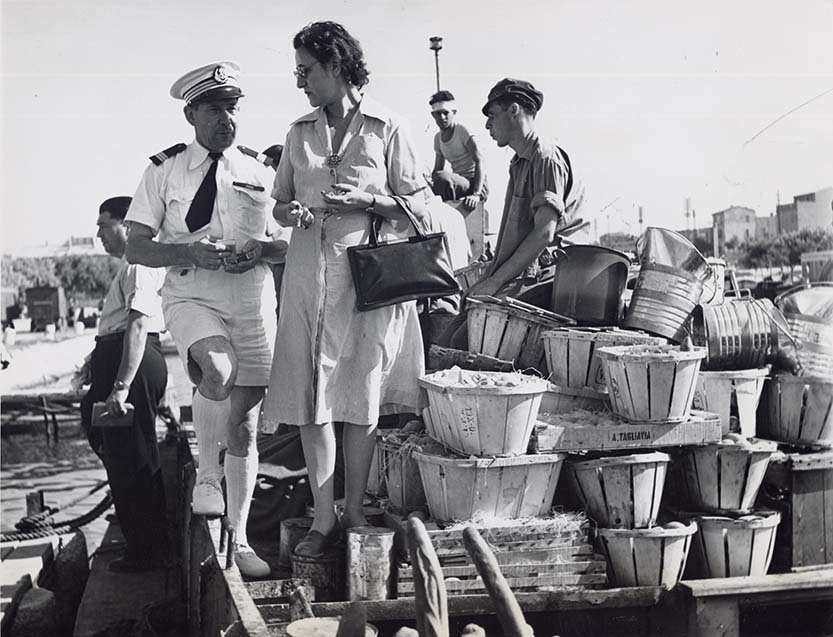
Captain Albert Pellegren, representative of the French Public Health Service, confers with JDC France Director Laura Margolis on refugee health aboard the Exodus 1947. Port de Bouc, France, 1947. Photo: Al Talyor. JDC Archives, NY_12586.
Photos
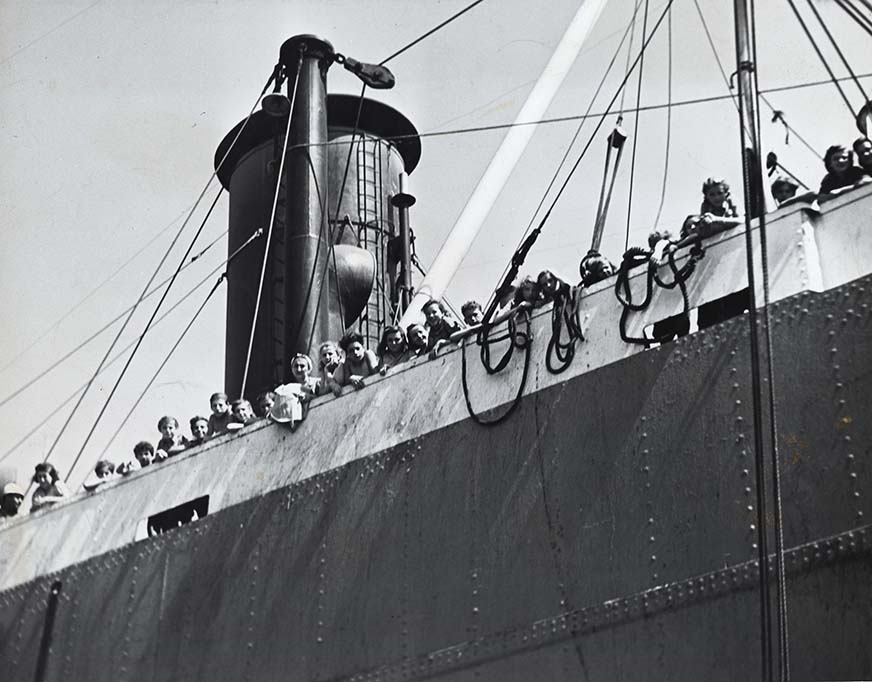
Jewish refugees aboard the SS Runnymede. Port-de-Bouc, France, 1947. Photo: Al Taylor. JDC Archives, NY_12593.
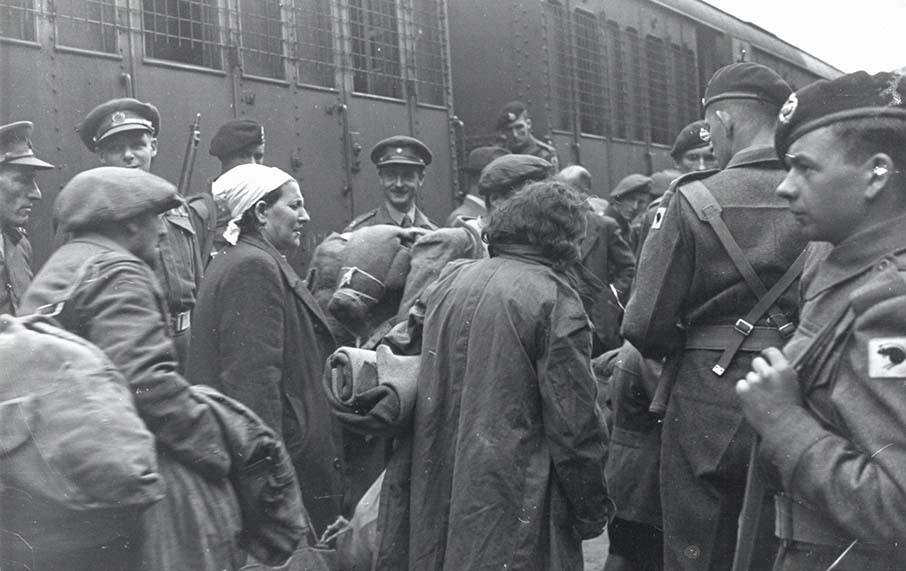
Armed guards oversee passengers from the SS Exodus boarding trains to take them to a camp in the British zone of Germany. Germany, 1947. Photo: Ursula Litzmann. JDC Archives, NY_13841.
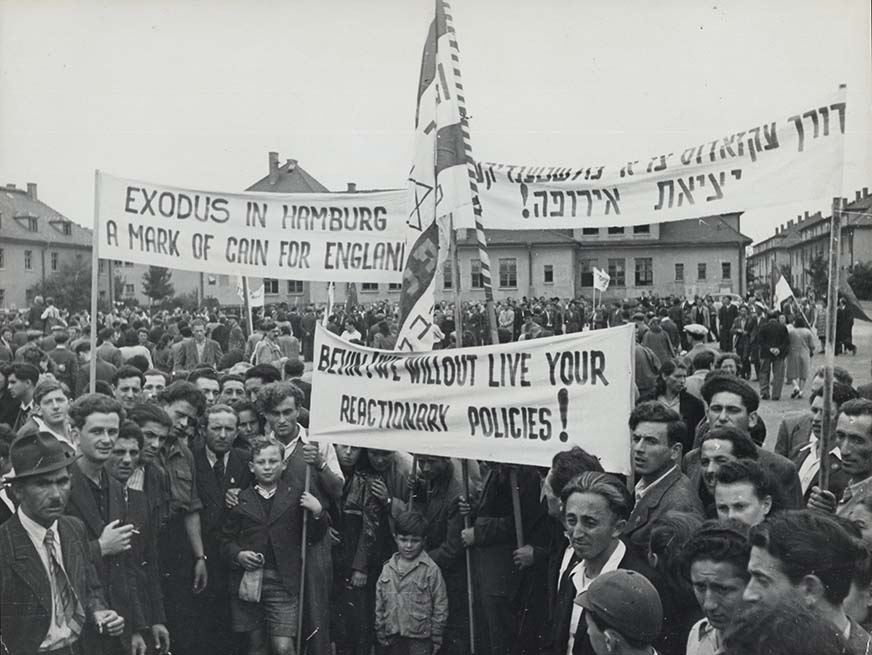
Refugees from a displaced persons camp in the British Zone protesting the detainment of passengers from the SS Exodus. A poster reads “Exodus in Hamburg as a mark of Cain for England.” Germany, ca.1947. Photo: Ursula Litzmann. JDC Archives, NY_13850.
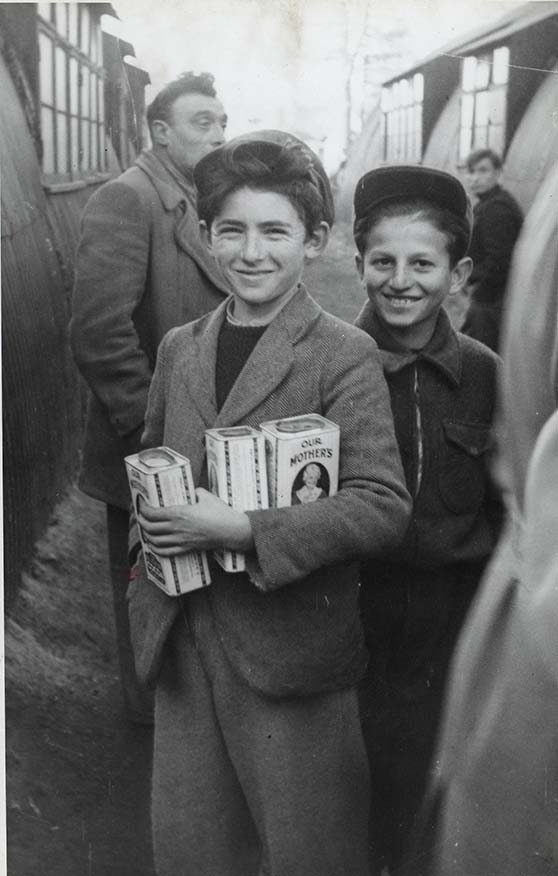
Refugee children from the SS Exodus with food raions provided by JDC. Germany, 1947. Photo: Ursula Litzmann. JDC Archives, NY_13820.
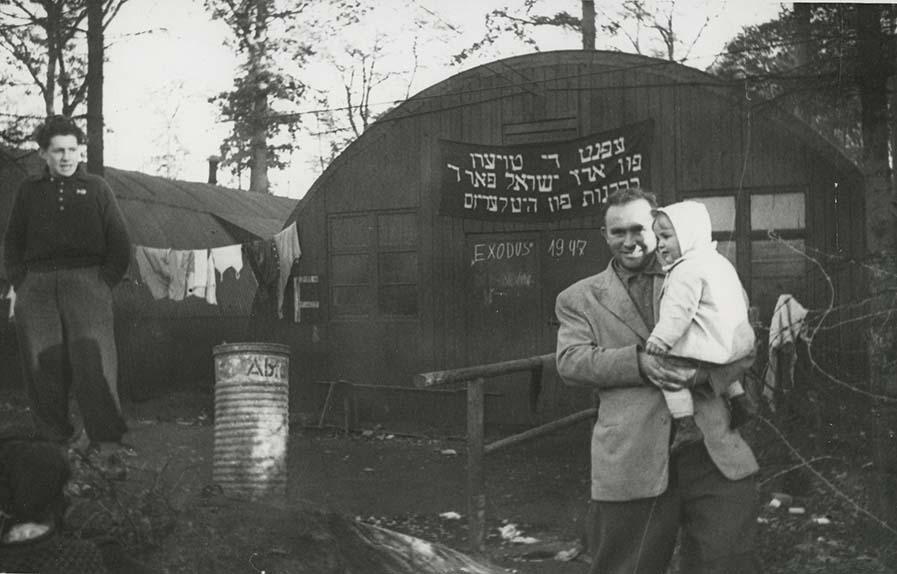
Refugee from the SS Exodus holds a baby in front of Nissen hut. Germany, 1948. Photo: Ursula Litzmann. JDC Archives, NY_50484.
For additional photos, search our photo collection.
Primary Sources from the Text Collection
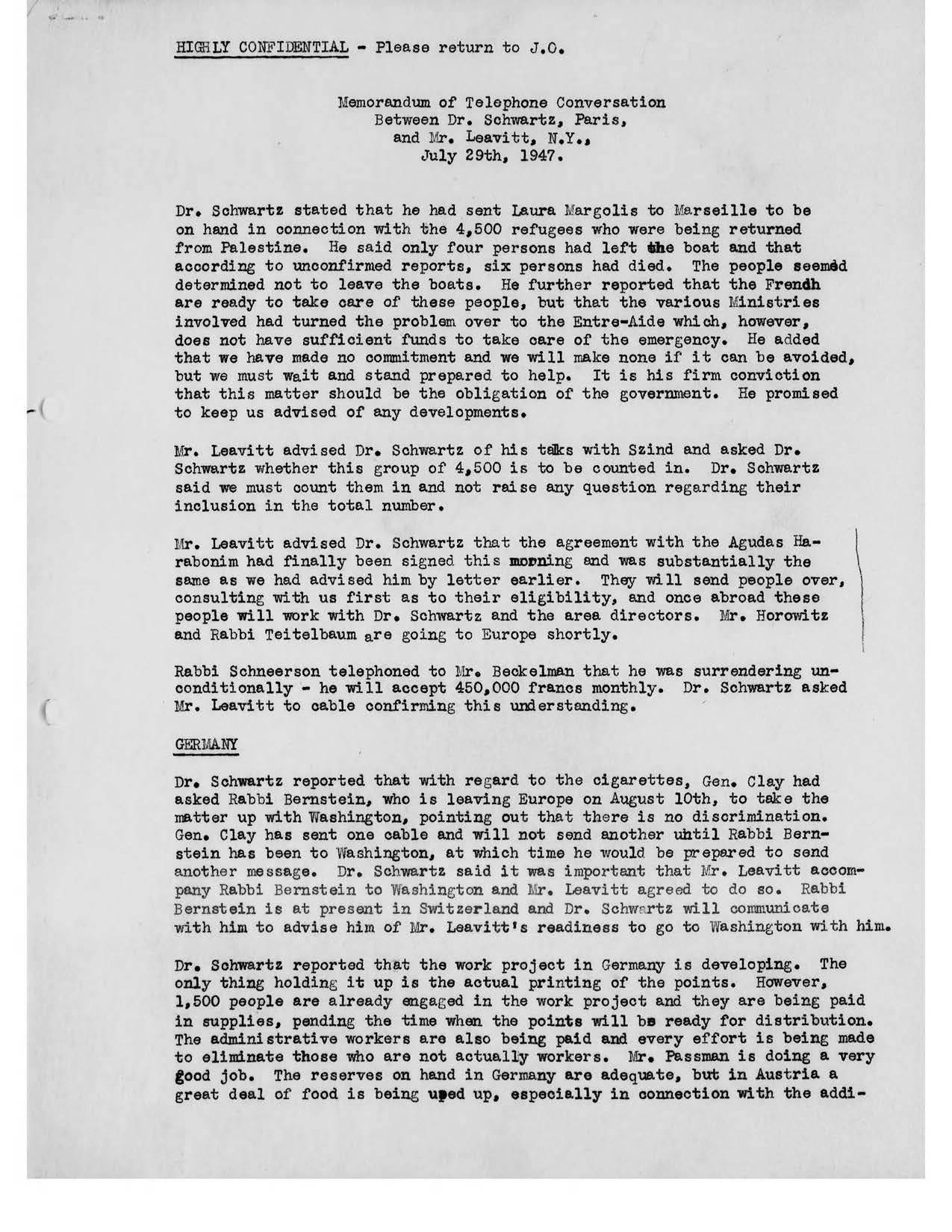
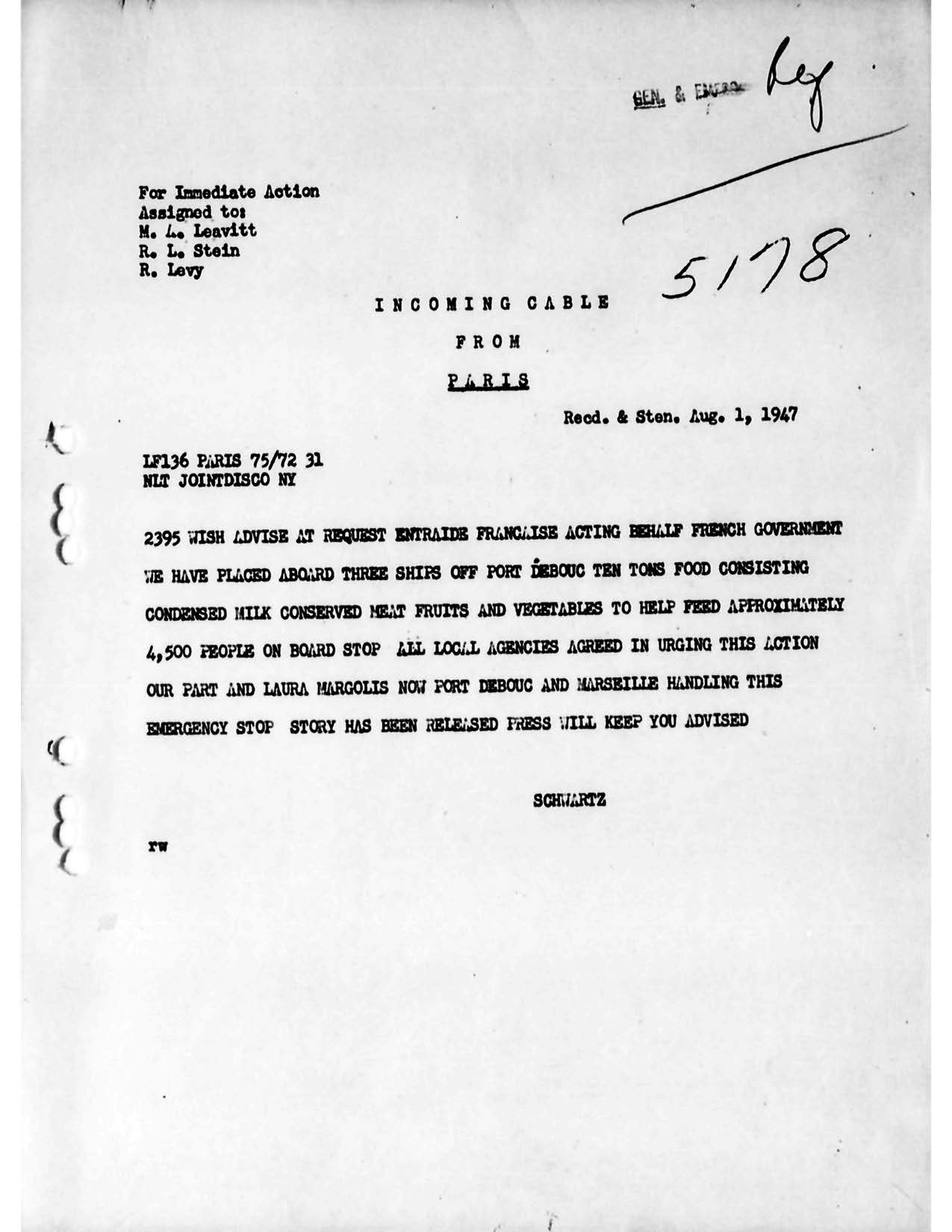
For More Information on This Topic:
Gruber, Ruth. Exodus 1947: The Ship that Launched a Nation. New York: Times Books, 1999.
JDC Archives, Geneva Collection 1945-1954, Folder P.I.146, Palestine: Exodus Group. 1947-1948, item 171753.